
The pros and cons of living in Curaçao come down to a clear trade. You gain a climate outside the hurricane belt, three official languages, the framework of the Kingdom of the Netherlands and direct flights to Amsterdam and the US. In return you accept pricier imported goods, a slower island pace, salaries that lag prices and notary delays.
What are the pros of living in Curaçao?
A climate outside the hurricane belt
Curaçao lies outside the hurricane belt and is rarely hit by storms. For homeowners that means fewer disruptions and more predictable year-round living than on many other Caribbean islands.
Languages you already speak
The official languages are Papiamentu, Dutch and English. Americans and Dutch newcomers can handle contracts, banking and daily errands without a language barrier, while learning some Papiamentu goes a long way socially.
Part of the Kingdom of the Netherlands
Curaçao is a constituent country within the Kingdom of the Netherlands. Property transfers run through a notary, and the legal culture feels familiar to many Dutch buyers. For many international buyers, that structure is a large part of the appeal.
Direct flights home
Hato International Airport has direct flights to Amsterdam and to several US cities. Staying connected to family, clients and doctors back home is realistic, which is why many people use Curaçao as a base rather than a retreat.
An open property market
There are no ownership restrictions on foreigners, and capital gains tax on the sale of a private residence is 0%. Dutch and US nationals can buy freely without a residence permit.
History and culture on your doorstep
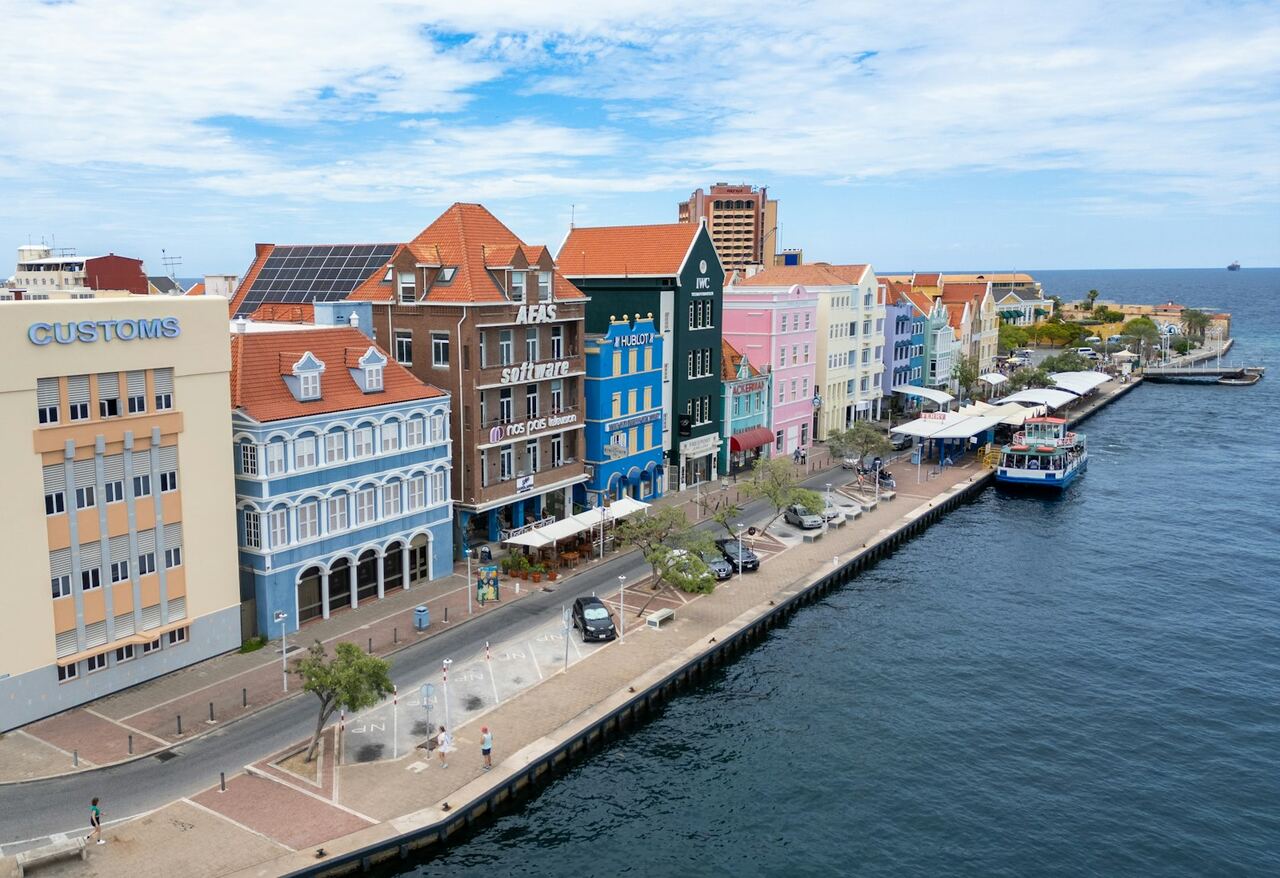
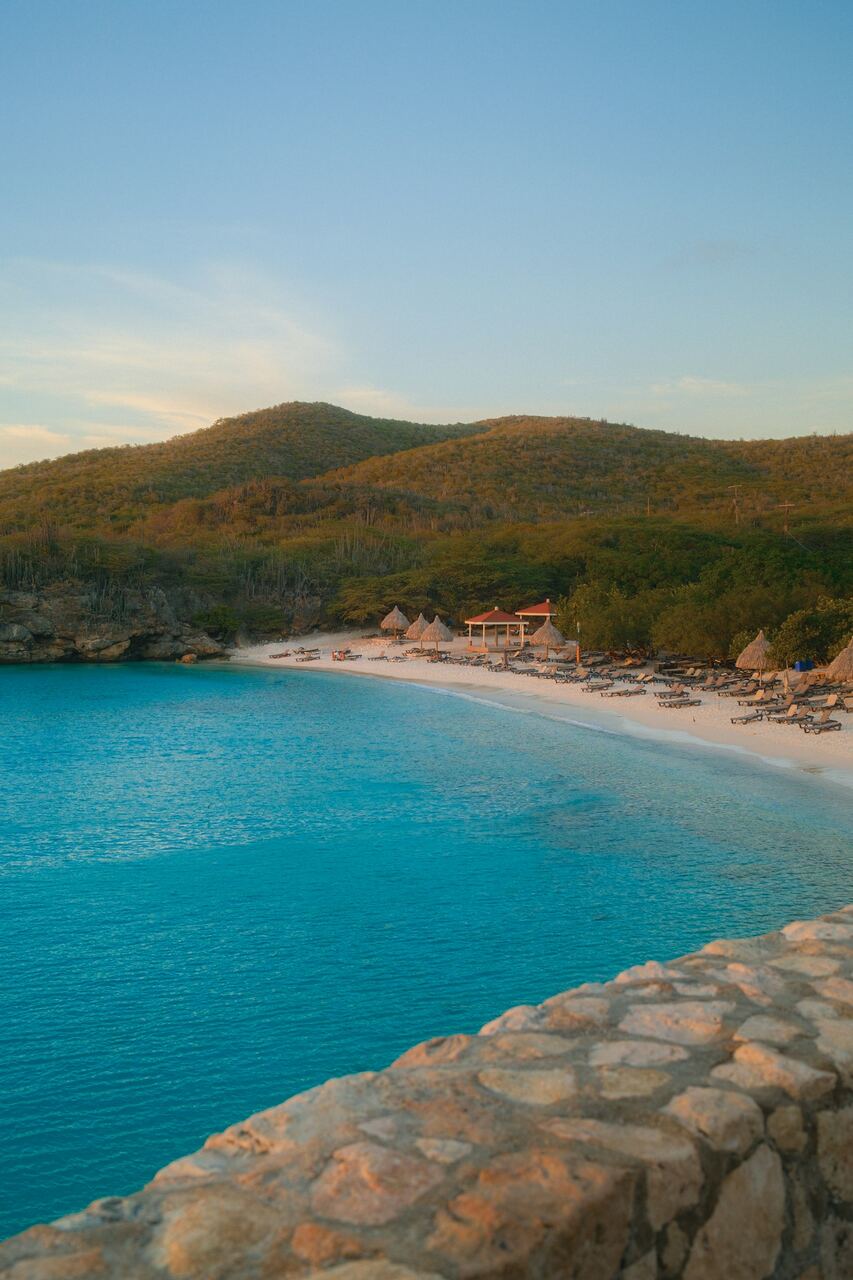
Willemstad’s historic centre (Punda and Otrobanda) is a UNESCO World Heritage Site, and Pietermaai next door has boutique hotels, restaurants and nightlife. On the west side, Christoffel National Park and beaches like Grote Knip offer nature within an easy drive.
What are the cons of living in Curaçao?
Imported goods cost more
Much of what you buy in the supermarket, the hardware store or the car dealership is imported, and you pay for that. Brands you know from home are usually available, but often at a premium. Buying local and seasonal helps.
The island pace
Things take longer here. Permits, repairs, deliveries and appointments rarely move at the speed of Amsterdam or Miami. People who thrive treat patience as part of the lifestyle; people who fight it get frustrated.
Local salaries versus prices
The local average gross salary is about EUR 1,700 per month, while the median asking price for a home was XCG 1,160,000 (about USD 648,000) in the January 2026 CaribbeanHouseHunt report. If you plan to work locally, budget carefully. Living in Curaçao is easiest on foreign income, savings or a pension.
Notary delays and an opaque market
A purchase takes 6 to 8 weeks on paper, but up to 3 months in practice because of a shortage of notaries. There is also no MLS and no public database of sold prices, and listings are spread over 45+ agencies. You need local guidance to judge value, because sold-price data simply does not exist publicly.
Residency is not automatic
Owning property alone does not give you a residence permit. Residency is a separate track with the immigration department, with its own conditions.
The pros and cons at a glance
Put side by side, the trade looks like this. Most of the pros are structural and permanent, while most of the cons can be managed with planning, patience and good local advice.
| Pros | Cons |
|---|---|
| Outside the hurricane belt | Imported goods cost more |
| Papiamentu, Dutch and English | Slower island pace |
| Kingdom of the Netherlands framework | Local salaries lag prices |
| Direct flights to Amsterdam and the US | Notary delays of up to 3 months |
| No ownership restrictions on foreigners | Owning a home is not residency |
Is living in Curaçao expensive?
It depends on how you live. A household that eats local, drives a modest car and rents outside the resort communities lives very differently from one in a gated golf community. We do not quote cost-of-living indexes, because reliable official figures are hard to find. The better route is to rent for a while and build a budget from your own receipts.
Owners should also plan for annual property tax (OZB): 0.4% up to XCG 350,000 (about USD 196,000), 0.5% up to XCG 750,000 (about USD 419,000) and 0.6% above that.
Rules can change, confirm your situation with a notary or tax advisor.
Who is living in Curaçao a good fit for?
- Retirees and semi-retirees with foreign income, who may look at the penshonado regime (confirm the current conditions with the immigration department).
- Remote professionals who value flights home and a familiar language.
- Second-home owners, especially Dutch buyers, who often stay longer and outside the resorts.
- Families who want water, space and a calmer rhythm.
Read our full guide to living in Curaçao for daily-life detail, or browse homes for sale in Curaçao to see what different budgets buy. Dutch readers can find the same topic in het Nederlands.
Frequently asked questions
Is Curaçao safe from hurricanes?
Curaçao lies outside the hurricane belt and is rarely hit. That is one of the main reasons buyers choose it over islands further north.
Do people speak English on Curaçao?
Yes. English is one of the official languages, alongside Papiamentu and Dutch.
Can I work locally on Curaçao?
That depends on your permit. Under the penshonado regime, for example, local employment is not allowed. Check your situation with the immigration department.
Why does buying on Curaçao take so long?
The transfer runs through a notary, and a shortage of notaries means up to 3 months in practice instead of 6 to 8 weeks on paper.
Lees dit artikel in het Nederlands: Wonen op Curaçao: de eerlijke voor- en nadelen op een rij