
Moving to Curaçao works best in four steps: choose two or three areas that fit your daily life, rent there first, buy once you know the island, and treat residency as a separate track with the immigration department. Foreigners can own property freely, but owning a home does not give you the right to live here.
What should you know before moving to Curaçao?
Curaçao is a constituent country within the Kingdom of the Netherlands, and its official languages are Papiamentu, Dutch and English. Most newcomers from the Netherlands and the United States find they can handle daily life, paperwork and property matters in a language they already speak.
The island sits outside the hurricane belt and is rarely hit by storms, which matters for building, insurance and peace of mind. Hato International Airport has direct flights to Amsterdam and to several US cities, so family visits and business trips stay practical.
The local currency is the Caribbean guilder (XCG), which replaced the Antillean guilder on 31 March 2025. One US dollar is 1.79 XCG, which keeps budgeting simple if your income is in dollars.
How do you choose an area to live in on Curaçao?
Start with how you want to spend a normal Tuesday, not a holiday. Each part of the island has its own rhythm.
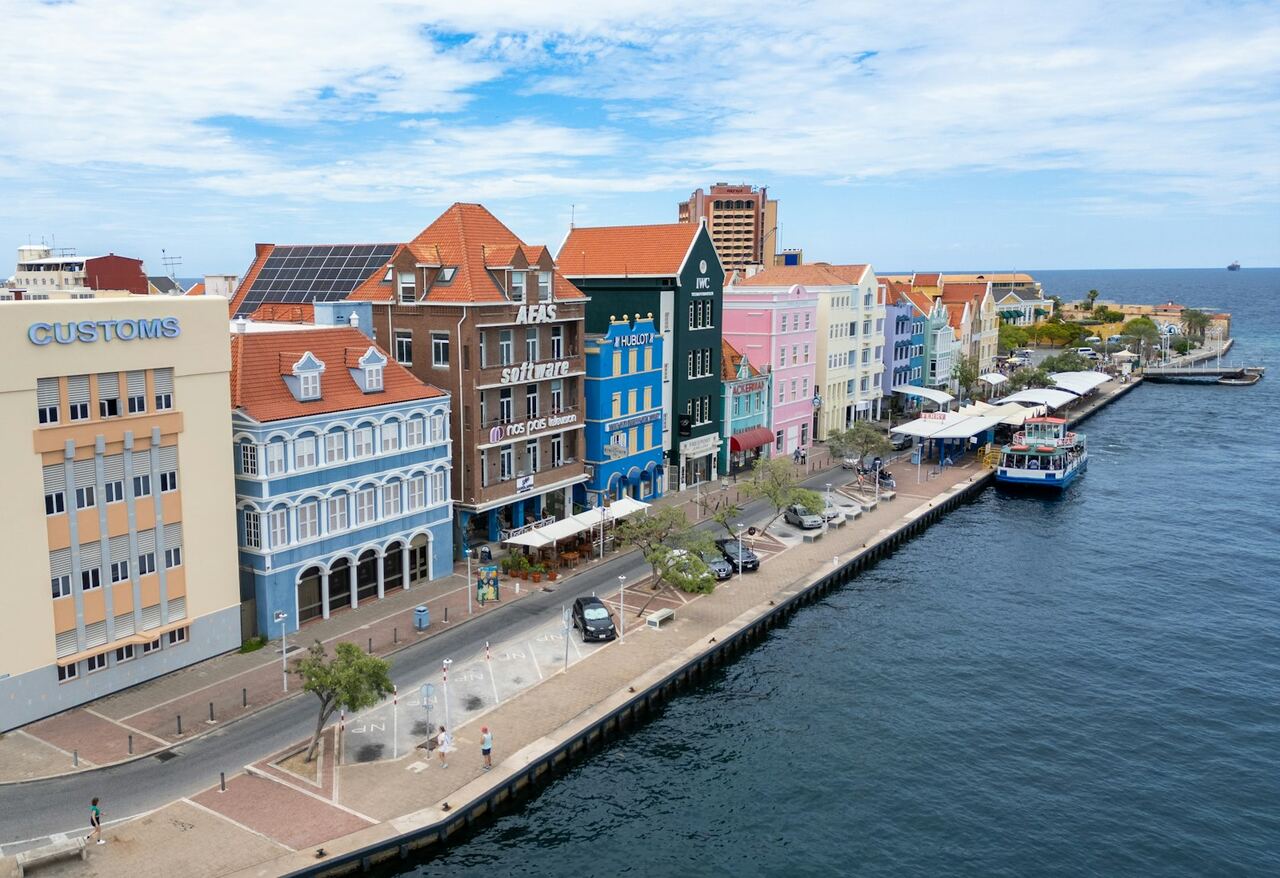
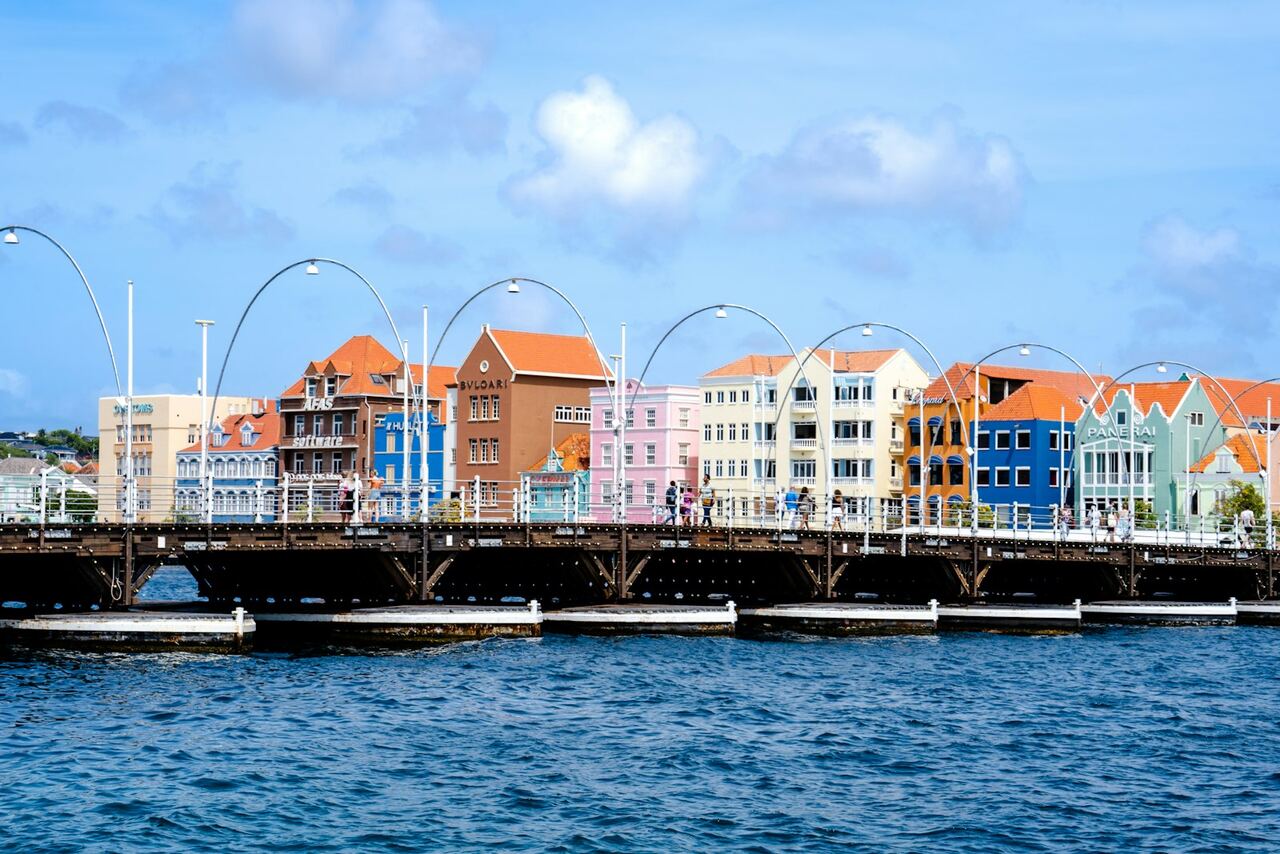
- Pietermaai and the historic centre: the restored historic district east of Punda, with boutique hotels, restaurants and nightlife. Punda and Otrobanda are part of Willemstad’s UNESCO World Heritage Site. Best if you want to walk to dinner.
- Jan Thiel and Spanish Water: the south-east coast, with beach clubs, restaurants, gated resort communities and a large inland bay with marinas and sailing.
- Santa Barbara Plantation: a gated golf and beach community near Spanish Water, in the top price segment.
- Blue Bay: a gated golf and beach resort community north-west of Willemstad.
- Coral Estate: a gated resort community at Rif St. Marie on the west coast, with ocean views and diving.
- Westpunt and Banda Abou: the quieter west, with nature, beaches like Grote Knip and Christoffel National Park. Ideal if you want space and calm and do not mind the drive into town.
Our guide to living in Curaçao goes deeper into daily life on the island and what newcomers tend to underestimate.
Should you rent first when moving to Curaçao?
For most people, yes. Renting first lets you test commute times, noise, wind, neighbours and the distance to shops before you commit capital. An area that feels perfect during a one-week holiday can feel very different in another season or on a weekday morning.
Renting also gives you time to learn how the market works. There is no MLS, no national listings portal and no public database of sold prices on Curaçao, and listings are spread over 45+ agencies. Living here for a while helps you see which streets and complexes hold their appeal.
A practical approach is to rent in your first-choice area and spend weekends exploring your second and third choices. Browse homes currently for sale in Curaçao while you rent, so you know what your budget buys before you need to decide.
How does buying a home on Curaçao work?
There are no ownership restrictions on foreigners. Dutch and US nationals can buy freely, and you do not need a residence permit to own property. The purchase runs through a notary, who holds the deposit and executes the transfer deed (akte van levering).
- Purchase agreement: as a private buyer of a residential property you have a cooling-off period of 3 full working days, no reason required.
- Deposit: a maximum of 10%, held by the notary.
- Transfer: 6 to 8 weeks on paper, up to 3 months in practice because of a shortage of notaries.
- Closing costs: about 5% to 8% all-in for the buyer, of which 4 points is transfer tax.
If you need a mortgage, non-residents typically need 35% to 40% down, while residents usually need 20% to 30%. Local banks decide case by case, so speak to a bank early. Prices on Curaçao are asking prices: in January 2026 the median asking price was XCG 1,160,000 (about USD 648,000), according to the CaribbeanHouseHunt market report covering 802 active listings.
Is residency a separate process from buying property?
Yes, and it is the point newcomers most often miss. Owning property alone does not give you a residence permit. Residency is handled by the immigration department and follows its own rules and timelines.
Two routes are relevant for many buyers. The penshonado (retiree) regime is for people aged 50 and over who meet several conditions, including owning a home for own use worth at least XCG 450,000 (about USD 251,000). The investor residence permit has official tiers starting at XCG 500,000 (about USD 279,000). Dutch nationals have their own residence rules. Confirm the current requirements with the immigration department before you plan around them.
Rules can change, confirm your situation with a notary or tax advisor.
What does a realistic timeline for moving to Curaçao look like?
| Phase | What happens |
|---|---|
| Exploration | Visit, shortlist two or three areas, talk to a bank about financing |
| Residency | Check which route fits you and start with the immigration department |
| Renting | Live in your first-choice area and test daily life |
| Offer and agreement | Sign, 3 working days cooling off, deposit of up to 10% |
| Transfer | 6 to 8 weeks on paper, up to 3 months in practice at the notary |
Build slack into the notary phase. Planning movers, shipping or the end of a lease around the paper timeline is the most common mistake we see.
Prefer to read about emigrating to Curaçao in Dutch? Our relocation guide is also available in het Nederlands.
Frequently asked questions
Can foreigners buy property on Curaçao?
Yes. There are no ownership restrictions on foreigners, and Dutch and US nationals can buy freely. You do not need a residence permit to own property.
Does buying a home give me residency on Curaçao?
No. Owning property alone does not give you a residence permit. Residency is a separate application with the immigration department.
How long does it take to buy a house on Curaçao?
From purchase agreement to transfer deed, plan on 6 to 8 weeks on paper and up to 3 months in practice, because there is a shortage of notaries.
Lees dit artikel in het Nederlands: Emigreren naar Curaçao: stappenplan van oriëntatie tot sleutel