
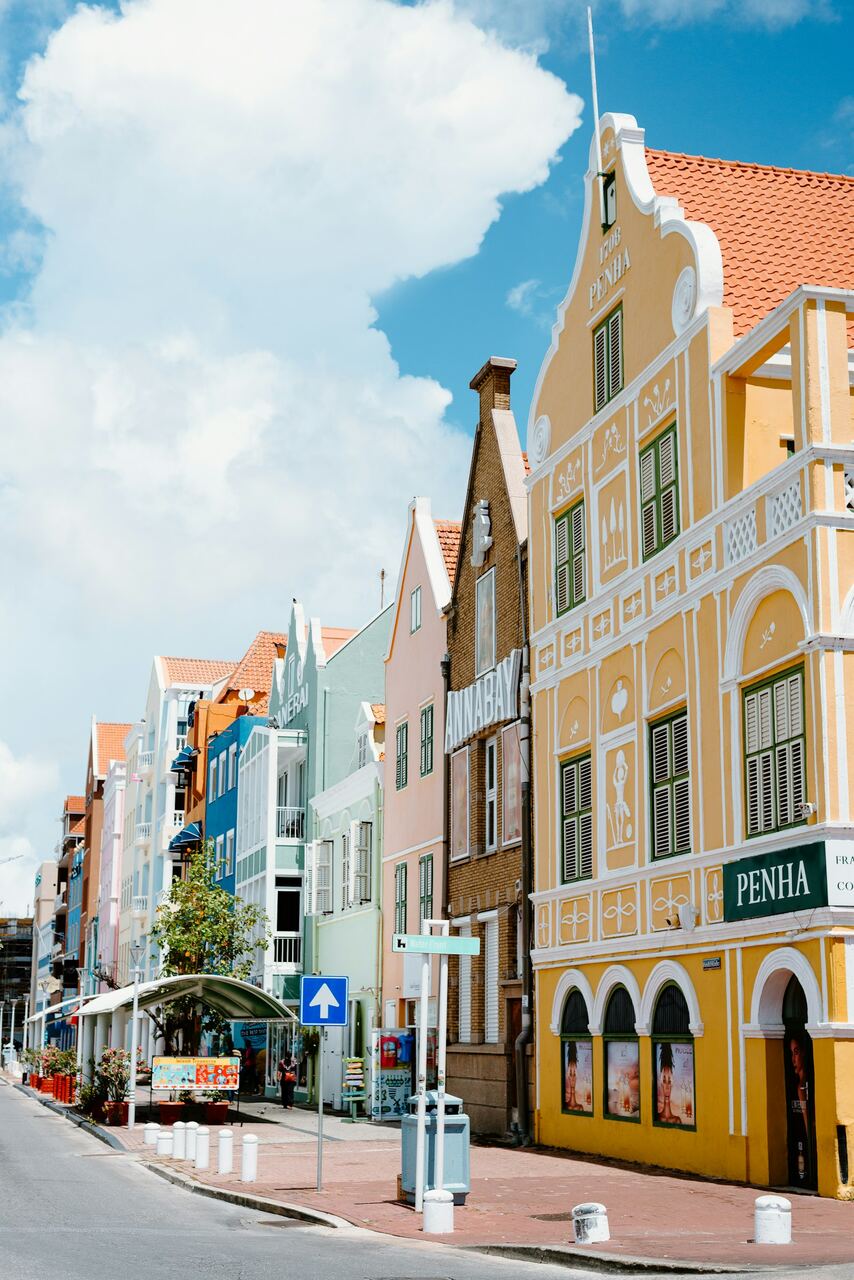
Pietermaai is the restored historic district just east of Punda in Willemstad, known for its colourful colonial townhouses, boutique hotels, restaurants and lively evenings. Living here suits people who want walkable city life, character architecture and culture on their doorstep, rather than a gated resort or a quiet beach setting.
We know the neighbourhood well because we work in it every day. Our office is at Kaya Wilson Papa Godett 81, in the heart of Pietermaai, so this guide comes from the street rather than from a brochure. If you are still comparing parts of the island, start with our overview of living in Curaçao and come back here when city life appeals.
What is Pietermaai like as a place to live?
Pietermaai is compact, colourful and social. The district stretches along the waterfront east of Punda, with narrow streets of restored merchant houses, many of them now home to boutique hotels, small restaurants, cafés and bars. In the morning it is calm, with people walking to work or heading out for coffee. By evening the terraces fill up and the neighbourhood becomes one of the island’s main places for dining and nightlife.
Daily life here feels more urban than anywhere else on Curaçao. You can walk to Punda for shops, government offices and the harbour front, and the sea is never far away. That is the main difference with the resort communities: in Pietermaai, the city itself is your amenity.
Is Pietermaai part of UNESCO Willemstad?
Willemstad’s historic centre, made up of Punda and Otrobanda, is a UNESCO World Heritage Site. Pietermaai sits directly next to Punda and shares the same story of Dutch colonial trade and Caribbean building traditions. Walking from one to the other, you see the same pastel façades, gabled rooflines and shuttered windows.
For residents, this heritage setting is a large part of the appeal. It also brings responsibility. Historic buildings can come with rules on what you may change on the outside, and renovation plans may need approval. Check the status of any specific building with the notary and our team before you commit.
What are the restored townhouses in Pietermaai like?
Many homes in Pietermaai are historic townhouses that have been brought back to life after years of neglect. A well restored property typically offers:
- Character: high ceilings, thick walls, tall shuttered windows and original details.
- Courtyards: inner gardens or patios that create privacy and shade in the middle of the city.
- Flexible layouts: some buildings combine living space with a studio, office or guest suite.
- Location: a short walk to restaurants, the waterfront and Punda.
There are trade-offs. Older buildings need careful maintenance in a warm, salty climate. Outdoor space is usually smaller than in a villa community, and large private pools are less common on tight historic plots. Parking can be limited in the older streets, so ask about it for every property you view. If a building still needs restoration, budget time and expertise as well as money, and work with contractors who know historic construction.
Who does living in Pietermaai suit?
In our experience, Pietermaai works best for:
- City lovers who want restaurants, culture and people around them rather than a quiet cul-de-sac.
- Remote professionals and entrepreneurs who like to work from a café or walk to meetings in town.
- Second-home owners who want a lock-up-and-leave base with plenty to do on arrival.
- Buyers who value architecture and the story of a building as much as its square metres.
- Couples and singles, more than families who want a large garden.
Who might prefer another part of the island?
Pietermaai is not for everyone, and we would rather say so upfront. If you want a sandy beach at the end of your street, a large private pool or complete quiet at night, look at gated communities such as Jan Thiel, Blue Bay or Coral Estate, or the calmer west around Westpunt. Evening activity in the district can mean music and traffic until late, especially near the busiest terraces. Families who want space to play and a garden often find more choice outside the city centre. Our guide to Curaçao’s neighbourhoods compares the main options side by side.
What should you know before buying in Pietermaai?
The buying process is the same as anywhere else on the island. A few facts worth knowing:
- There are no ownership restrictions for foreigners, and you do not need a residence permit to own property.
- Prices on Curaçao are asking prices. There is no MLS and no public database of sold prices, and listings are spread across more than 45 agencies.
- Buyer closing costs are about 5% to 8% all-in, of which 4 points is transfer tax.
- A private buyer of a residential property has a cooling-off period of 3 full working days, no reason required.
- From purchase agreement to transfer at the notary takes 6 to 8 weeks on paper, and up to 3 months in practice.
Rules can change, confirm your situation with a notary or tax advisor. Because supply in a small historic district is limited, the right property is not always online. Keep an eye on our current homes for sale and tell us what you are looking for, so we can call you when something suitable comes up.
Frequently asked questions
Is Pietermaai a good place to live in Curaçao?
For people who enjoy city life, yes. It is walkable, full of character and close to Punda, restaurants and the sea. If you want a quiet beach setting, a gated community may suit you better.
Can foreigners buy a home in Pietermaai?
Yes. Curaçao has no ownership restrictions for foreigners, and Dutch and US nationals can buy freely. Owning property does not by itself give you a residence permit.
Is Pietermaai noisy at night?
Parts of it can be, especially near popular bars and restaurants. Streets a little away from the busiest terraces are calmer. Visit at different times of day before you choose a property.
Do homes in Pietermaai have pools?
Some restored properties have a small pool in a courtyard, but large pools are less common than in the resort communities because historic plots are tighter.
Lees dit artikel in het Nederlands: Wonen in Pietermaai Curaçao: historisch en levendig