
A second home in Curaçao is straightforward to own: there are no ownership restrictions on foreigners and no residence permit is needed. Most buyers choose a location by lifestyle first, budget about 5% to 8% for closing costs, and arrange rental and local management for the months they are away.
Curaçao has long been a favourite for part-time living, especially for buyers from the Netherlands, and interest from the United States is growing fast. This guide covers who buys, where, what it costs and how to rent out and manage your home when you are not on the island. For the bigger picture, see our guide to living in Curaçao.
Who buys a second home in Curaçao?
The classic second-home buyer is Dutch. Dutch visitors typically stay about 11 to 14 nights per trip, mostly outside the resorts, and many return year after year until renting no longer makes sense and buying does. They often look for a home in a neighbourhood with local life, a pool and easy access to beaches and restaurants.
American interest is rising quickly. In March 2026 the United States overtook the Netherlands as Curaçao’s number one source market for the first time. American visitors stay about 6 nights and around 65% choose resorts, so they are often drawn to resort and branded products with services on site.
Tourism supports this demand: Curaçao welcomed 788,427 stayover visitors in 2025, up 13% on 2024.
Can foreigners buy a second home in Curaçao?
Yes. There are no ownership restrictions on foreigners, and Dutch and US nationals can buy freely. You do not need a residence permit to own property. Owning a home does not by itself give you the right to live on the island, and Dutch nationals have their own residence rules, so confirm your position with the immigration department if you plan longer stays.
How do you choose the right location for a second home?
Start with how you want to spend your days on the island. The main options:
| Area | Character | Suits |
|---|---|---|
| Jan Thiel | Beach clubs, restaurants, gated resort communities | Social owners who want everything nearby |
| Spanish Water | Large inland bay, marinas, waterfront homes | Sailors and boat owners |
| Blue Bay | Gated golf and beach community | Golfers and lock-up-and-leave owners |
| Coral Estate | Gated resort on the west coast, ocean views, diving | Divers and nature lovers |
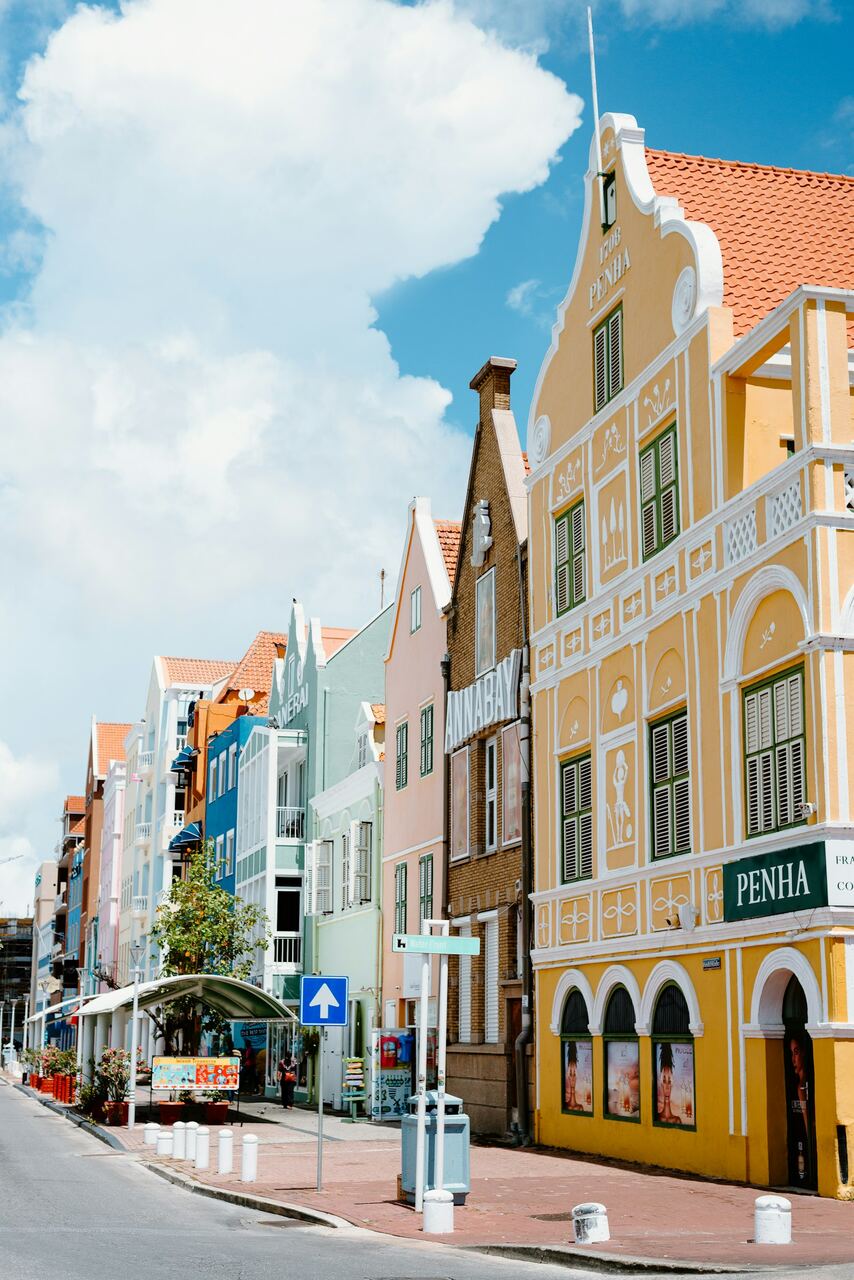
| Pietermaai | Restored historic district in Willemstad | City lovers |
| Westpunt and Banda Abou | Quiet west, nature, beaches like Grote Knip | Owners seeking peace and space |
For a part-time owner, a gated community often makes life easier: security, shared facilities and people on site while you are away. As a reference point, the island’s median asking price was XCG 1,160,000 (about USD 648,000) in January 2026, and in broker opinion apartments start from about EUR 200,000. These are asking prices; there is no public record of sold prices. Browse our homes for sale in Curaçao to see what each area offers today.
What does it cost to buy a second home in Curaçao?
- Transfer tax: 4% of the price or market value, whichever is higher, paid by the buyer.
- Total closing costs: about 5% to 8% all-in, including transfer tax and notary fees.
- Deposit: a maximum of 10%, held by the notary.
- Annual property tax (OZB): 0.4% up to XCG 350,000, 0.5% up to XCG 750,000 and 0.6% above XCG 750,000.
- Financing: non-residents typically need 35% to 40% down; rates are about 4.5% to 6%, with terms up to 30 years.
- Selling later: capital gains tax on the sale of a private residence is 0%.
Can you rent out your second home in Curaçao when you are away?
Yes, and many owners do. Understand the tax rules before you buy:
- Income tax: 35% of gross rent is deducted automatically; the remaining 65% is taxed at progressive rates from 9.75% to 46.5%.
- Turnover tax (OB): 7% on stays up to 90 days, 6% for 91 days to one year, and 0% on long-term residential lets of one year or more.
Be realistic about returns. Developer and broker projections often quote 8% to 12% gross (6% to 9% net) at 60% to 70% occupancy. Independent measured data for Willemstad (AirROI, 12 months to July 2026) shows an average daily rate of about USD 141, occupancy of 42.2% and average annual revenue of about USD 18,356 per listing. Treat projections as projections and plan with the measured figures. For many second-home owners, rental income helps cover running costs rather than being the main reason to buy. Our rental advice page goes into more detail.
Rules can change, confirm your situation with a notary or tax advisor.
How do you manage a second home in Curaçao from abroad?
Good management protects both your property and your rental income. Plan for:
- A local property manager for guest check-ins, cleaning, keys and emergencies.
- Regular maintenance: sun, salt air and wind are hard on paint, metal and air conditioning.
- Pool and garden care on a fixed schedule, whether or not guests are staying.
- A clear owner calendar, so your own weeks are blocked before booking platforms fill up.
- Insurance and paperwork kept current, including your tax registrations.
One advantage: Curaçao lies outside the hurricane belt and is rarely hit, which makes owning from a distance less stressful than on many Caribbean islands.
Frequently asked questions
Do I need a residence permit to buy a second home in Curaçao?
No. Foreigners can buy without a residence permit. Owning a home does not give you a residence permit either, so check the rules if you plan to stay for long periods.
How long does it take to buy a home in Curaçao?
From signed purchase agreement to transfer at the notary takes 6 to 8 weeks on paper, and up to 3 months in practice because of a shortage of notaries.
What tax do I pay when renting out my second home?
Rental income is taxed after an automatic 35% deduction, at progressive rates. Turnover tax depends on the length of stay: 7% up to 90 days, 6% up to one year and 0% for lets of a year or more. Confirm your situation with a tax advisor.
Can I get a mortgage for a second home in Curaçao?
Local banks lend to non-residents case by case, typically with 35% to 40% down. Rates are about 4.5% to 6%, with terms up to 30 years.
Lees dit artikel in het Nederlands: Vakantiewoning kopen op Curaçao: verhuur, belasting en rendement